
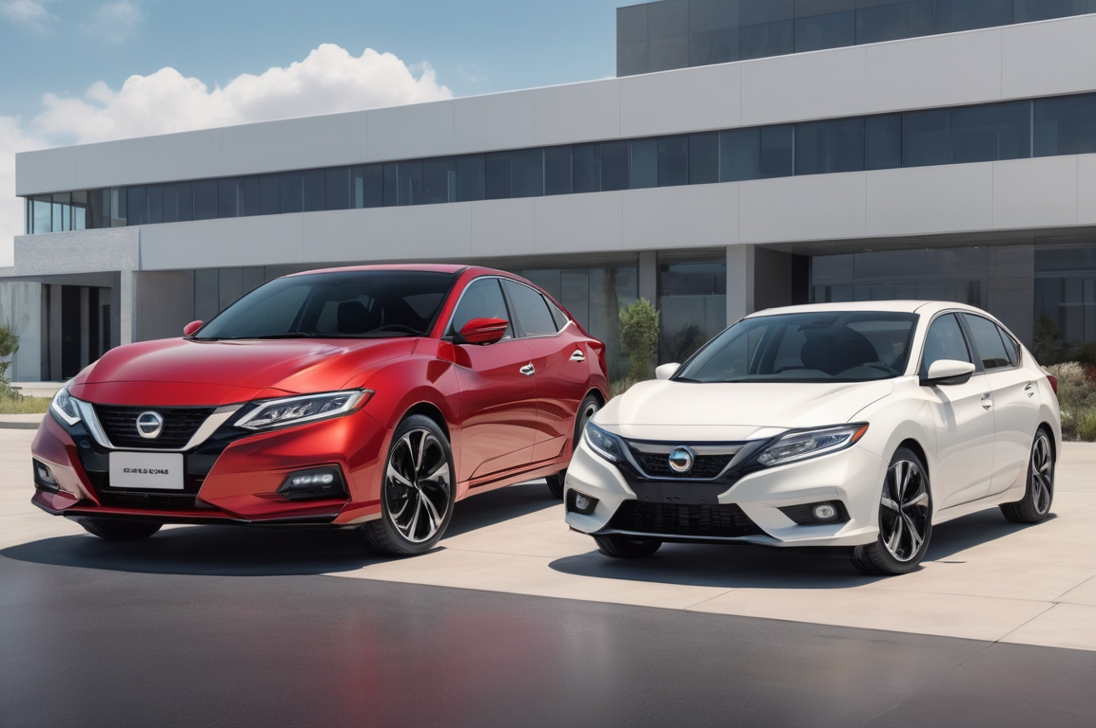
Nissan shares surged to a record high on Wednesday following media reports that the struggling Japanese automaker is seeking a merger with Honda Motor. The goal is to create a larger company capable of competing with stronger rivals and investing more in the expansion of the electric vehicle market.
Nissan shares jumped 23.7%, marking the best performance for the company since at least 1985, according to FactSet. The data does not include Nissan's stock prices prior to 1985. Meanwhile, Honda shares fell by 3%.
Honda and Nissan are reportedly considering operating under a holding company and may soon sign a memorandum of understanding, according to Nikkei. The report also indicates that Mitsubishi Motors, of which Nissan is the largest shareholder with a 24% stake, will be part of the new company.
In an interview with CNBC, Vivek Vaidya, Global Mobility Head at Frost & Sullivan, said that Nissan's financial struggles prompted the decision to consider a merger.
Back in November, Nissan reported weak results for its fiscal second quarter, ending in September, and downgraded its annual earnings and operational forecasts. The company also announced plans to cut 9,000 jobs and reduce production capacity by a fifth amid fierce competition in key markets.
Joe McCabe, President and CEO of AutoForecast Solutions, told CNBC that Nissan needs "a rethink," especially following difficulties in its relationship with Renault.
"Nissan hasn't truly established itself as a leader in any of the segments it's trying to compete in," he noted.
Nissan stated that reports of a "business integration" with Honda are not based on official information. Nissan added that it is exploring various collaborative possibilities with Honda and Mitsubishi Motors, but no decisions have been made yet. Mitsubishi Motors shares closed up by 19.7%.
According to Vaidya, if the merger materializes, it would enable the three automakers to access innovative technologies, lower development risks, and capitalize on economies of scale.
He also noted that the merged company would benefit from producing not only conventional combustion engine vehicles but also hybrids, battery electric vehicles, and hydrogen-powered vehicles.
The merger between Honda, Japan’s second-largest automaker, and Nissan, the third-largest, would mitigate innovation risks amid high development costs for combustion engines and battery EVs.
As per Nikkei, the proposed Nissan-Honda-Mitsubishi conglomerate would produce over 8 million vehicles annually, ranking it among the largest automakers globally, though still behind Toyota (11.2 million vehicles in 2023) and Volkswagen (9.2 million vehicles).
The potential merger comes after Honda and Nissan signed a strategic partnership this year, focusing on shared automotive components and software development.
This union would represent the largest automotive merger since Fiat Chrysler’s merger with French PSA Groupe to form Stellantis in January 2021.
The global automotive industry faces significant challenges, including the transition to EVs, where companies like Chinese BYD dominate. For instance, Volkswagen plans to shut down factories and cut thousands of jobs in Germany, while General Motors recently ended its Cruise project for autonomous robotaxis.
For Honda and Nissan, additional risks include potential new tariffs from President-elect Donald Trump, necessitating a major overhaul of global supply chains.