
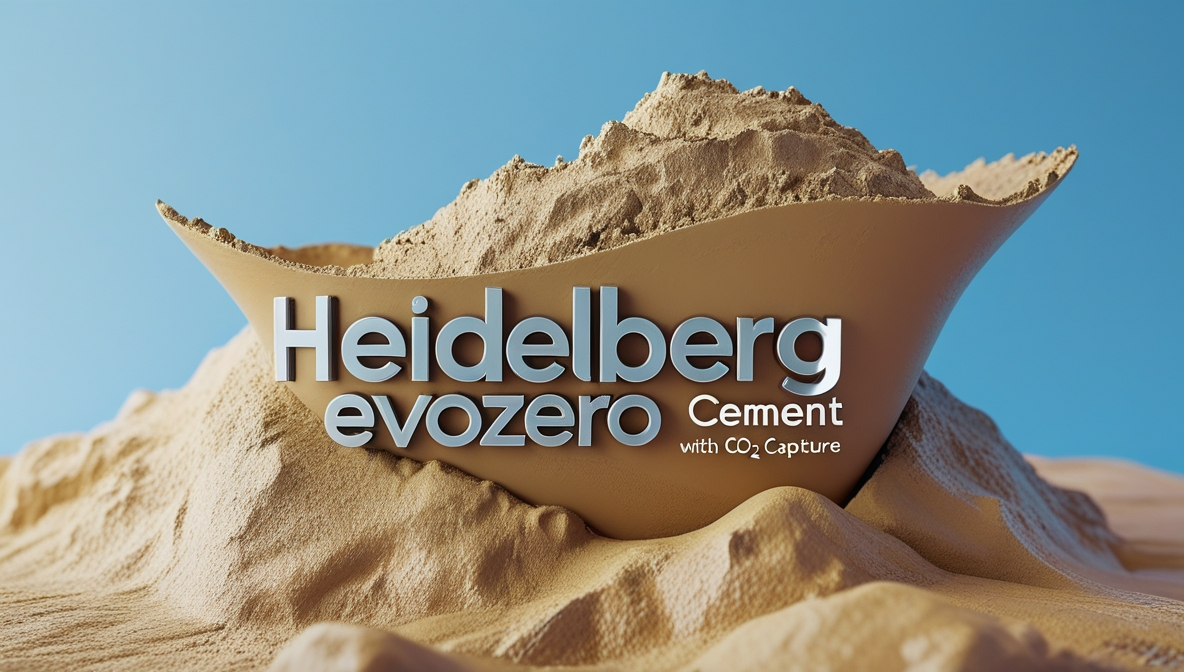
The German company Heidelberg Materials has fully sold out the volumes of cement that will be produced this year at its modernized Norwegian plant in Brevik using zero-emission technology. This was announced by the company’s CEO, Dominic von Achten.
The cement industry is considered one of the hardest to decarbonize because traditional cement production generates significant CO₂ emissions — both from fuel combustion and the chemical process of converting limestone into clinker. Overall, this sector accounts for about 8% of global carbon dioxide emissions.
The Brevik plant is equipped with a CO₂ capture installation that can capture about half of the facility’s emissions. This enables the production of so-called zero-emission cement under the evoZero brand.
“We will not be able to immediately operate at full capacity because the plant is still ramping up production volumes. However, all volumes for 2025 have already been sold, and we continue to accept new orders,” von Achten said at the official opening of the facility.
Although evoZero is more expensive than regular cement, the company claims it provides significant benefits for builders aiming to reduce their carbon footprint.
The project is part of the large-scale Longship initiative, which aims to commercialize carbon capture and storage (CCS) technologies. It is funded by the Norwegian government, covering most of the costs, including the storage of CO₂ at a special underwater facility called Northern Lights. CO₂ from the Brevik plant will be transported to this facility in special containers.
The Northern Lights project is being implemented in cooperation with Shell, Equinor, and TotalEnergies.
“We know that in many industrial sectors there is no viable alternative, and that is why CO₂ capture and storage technologies must play a key role,” said Norway’s Energy Minister Terje Osmundsen in a comment to Reuters.
Regarding future subsidies for CCS projects, there is currently no clarity. Both von Achten and the Energy Minister believe that in the long term, the industry should develop a viable business model and commercialize such products without government support.